Most published SaaS marketing examples assume a paid media team and a brand budget you don't have. This list skips that. Each example is a growth move a solo founder can copy, with the channel, the tactic, and the one trade-off that decides whether it works for your launch this month.
Solo founders should copy SaaS marketing examples that create signups from the product itself, not from an ad account. Referrals, templates, free graders, public badges, use-case pages, and build-in-public updates all clear that bar. Pair the offer with one short launch video so a stranger understands the product before they click.
Paid acquisition is a weak default when you are still proving the offer. Benchmarkit figures for 2024 SaaS companies put median sales-and-marketing expense at $2.00 for every $1.00 of new ARR, a 14% increase from 2023, and a later read of that research put the 2025 median at $1.63. Those ratios move, and they still assume spend you may not have. Build the page and the loop first. When you do chase search, start by turning keyword research into shipped pages.
1. Dropbox Referral Program
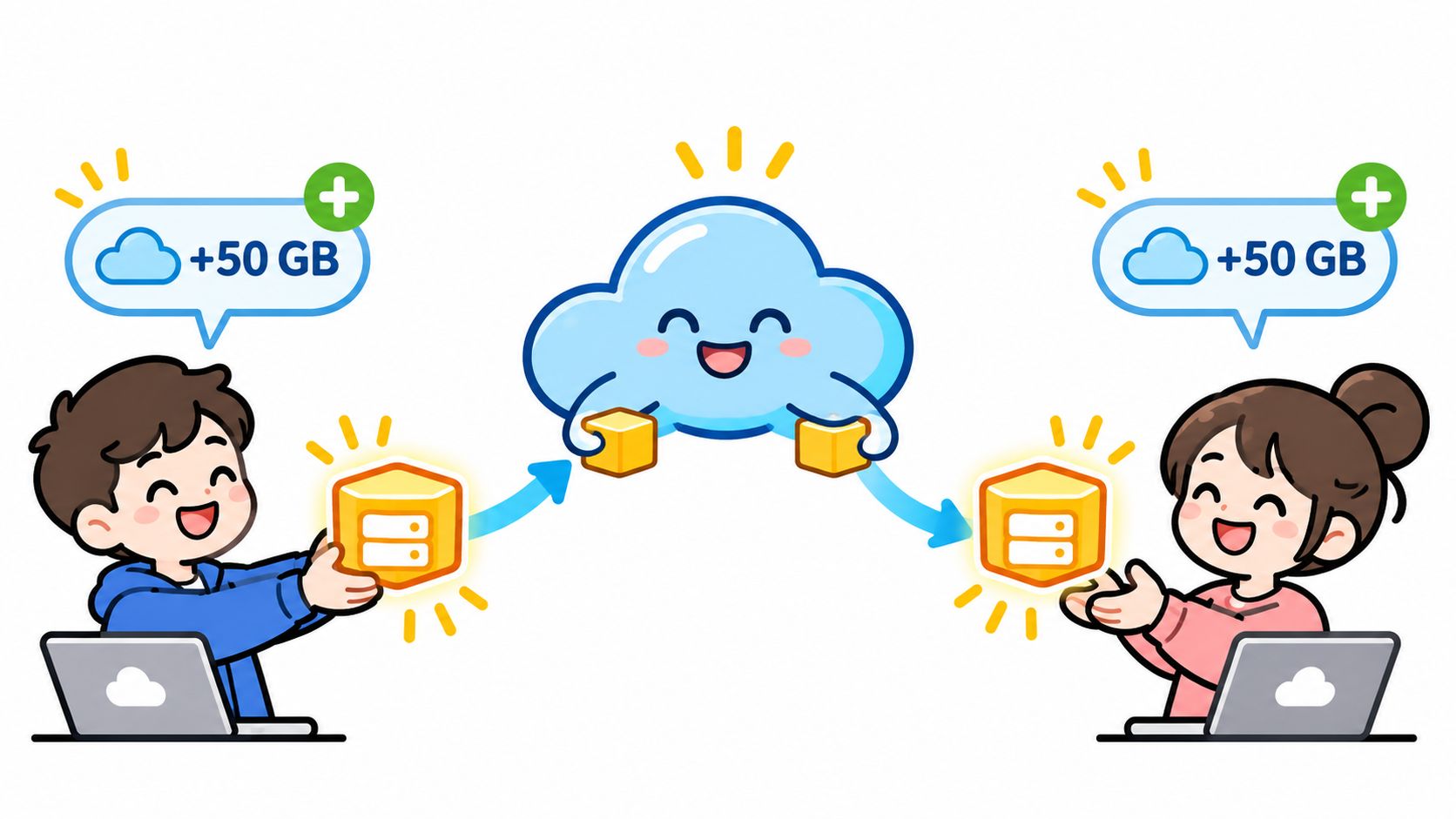
Dropbox didn't buy its early base with ads. Existing users got extra storage when a friend signed up, and the friend got storage too. The product was the channel.
Say you ship a notes app with a tight free tier. Offer both sides something you already meter, such as extra documents or a short stretch of a paid limit. Cap it. One enthusiastic user should not drain the plan you need for everyone else.
Make the reward something you already give
Meter a limit users feel: Storage, seats, credits, or exports. Cash bounties wreck a small budget.
Set a ceiling before you announce it: Write the cap in the same sentence as the reward.
Show the product before the invite: A stranger with a link still needs to know what they are joining.
The trade-off is simple. A two-sided reward spreads fast only if the free tier is already useful. If people don't want the product, extra credits won't save the launch.
Practical rule: If the reward isn't something your product already gives away, don't run the program.
This week, paste your landing page into ShipTeaser and post the 30-second silent motion-graphics teaser beside the invite steps. Five scenes carry it: hook, problem, solution, proof, and call to action. Put 16:9 on the site and 9:16 in the feed. Google's video creative guidance says vertical video can occupy 75% of the mobile screen, and campaigns that include vertical videos have seen 10% to 20% more conversions. Use that as a format choice, not as a reason to open an ad account.
2. Notion Template Ecosystem
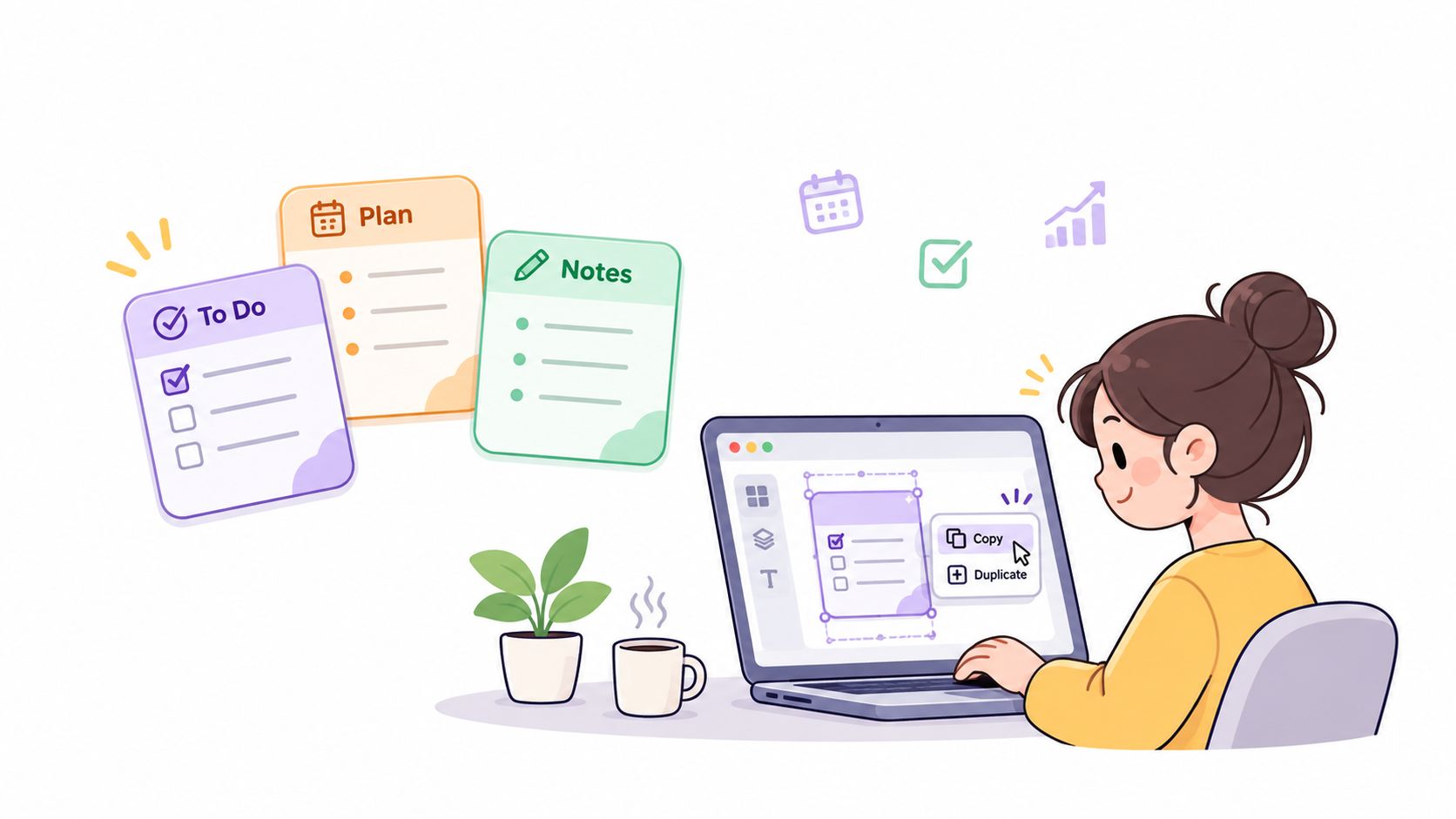
Publish one finished workspace a stranger can copy in two clicks, and you have a free demo with a path back to your product. That is the engine behind Notion's template ecosystem: shared workspaces for notes, projects, and planning turned searchers into users without a sales call.
A solo founder can copy this in a week. Build one starter workspace for your product and name it after the job it does, "plan a week without a blank page," not after your feature list. The test has three parts: a public template link, a destination page that stays put, and one signup event you can count. Where this fails is not the idea. It is the upkeep. A template whose setup steps still point at a button you renamed last sprint teaches people to leave.
Content earns the signup the same way. A Leadfeeder content program covered by Grow and Convert grew blog traffic to about 23,000 to 28,500 monthly pageviews, with 17,000 to 21,000 organic sessions, and more than 225 trial signups a month tied to the blog, about 12% of signups. On a small budget, the thing to steal is the tagged link and the conversion event, not the traffic size.
A shared template is a product demo that installs itself.
Ship the template with a visual of the full workflow
Post the template where your users already look: a docs gallery, a social thread, or a launch page. Keep the destination URL stable. When the click underperforms, fix the offer before you remake the asset. That is the same discipline people use when they fix underperforming Facebook and Instagram ads: the message and the page have to match.
This week, point ShipTeaser at the template's landing page and place the 30-second teaser above the download button. The crawl pulls copy, screenshots, and brand cues straight off that page, so the workflow on screen matches the file you are giving away. Read every frame against the live page and fix whatever it got wrong before you publish.
3. HubSpot Website Grader
A one-score checker takes a week to ship. Paste a URL, return a single number, list three fixes. HubSpot ran that play at scale with Website Grader: anyone could score a page on performance, SEO, mobile readiness, and security, and the useful result came first. The email ask appeared only when someone wanted the fuller report. That order is the whole campaign.
The catch is interpretation. A vague score fills your inbox with "what does this mean" replies, and the free tool eats the week you saved by skipping ads. Write the scoring rules so a stranger can read them without you.
Give the result before you ask for the address
One metric, not a dashboard: A score out of 100 is easier to share than twelve charts.
A result people can post: A short summary they can paste into a team chat does the distribution.
A path, not a pitch: Show the next step inside your product only after the score is on screen.
A free tool that withholds the answer until the form is filled is an ad with extra steps.
A solo founder's constraint here is money. Gartner's CMO Spend Survey, as cited by PPC put average marketing budgets at 7.7% of company revenue in 2025, unchanged from 2024. A grader you can describe in one paragraph fits that ceiling. A custom app with a sales follow-up team does not.
This week, point ShipTeaser at your checker's public page and post the 30-second launch video it renders next to the live URL. The teaser pulls the page's real headline and screenshots, so what viewers see matches what the tool does. Review the render for errors before publishing. Let visitors run one check before you ask for anything else.
4. Superhuman Waitlist and Product-Market Fit Survey
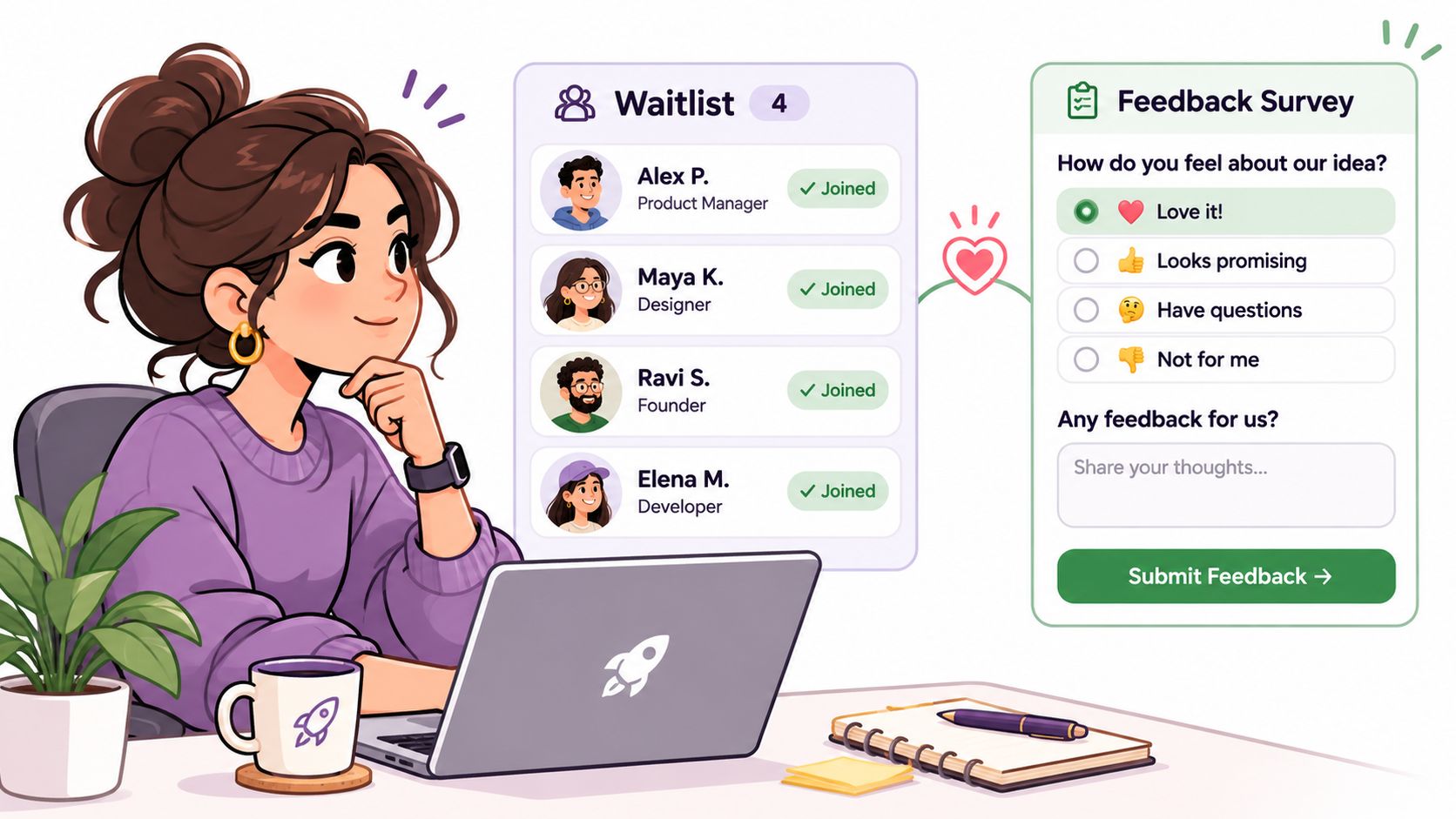
"How would you feel if you could no longer use this product?" That one question ran the Superhuman waitlist. Founder Rahul Vohra sent the survey to everyone who asked for access, then sorted the answers before letting people in. The gated list measured how much demand already existed. Address count was a side effect.
Launch attention is not revenue. On DEV Community, one founder case described more than 400 signups and one paying customer, a 0.25% conversion, and a summary of founder reports on the same page counted 50% of founders seeing some rise in registrations after a Product Hunt launch, 30% a significant rise, and 16% no noticeable spike. Treat a signup spike as a lead pool to qualify.
It proves nothing on its own.
Ask the disappointment question, then segment
Very disappointed: These people get the first paid offer.
Somewhat disappointed: Ask what is missing before you add features.
Not disappointed: Don't build the roadmap around them.
The trade-off is speed versus learning. A wide-open signup fills faster and teaches you less. A short survey slows the form and tells you who to write back. For a solo founder with a small list, the slower version wins every time, because a handful of qualified replies beats a pile of cold addresses.
Keep the list warm with honest proof. A beta launch announcement should state who the product is for and what is still rough. This week, paste your waitlist URL into ShipTeaser and post the 30-second video wherever you ask people to join. Google Play's Shorts guidance treats the first 3 to 5 seconds as critical and prefers 15 to 45 seconds, with 30 seconds as a sweet spot, in 9:16 at 1080p, filling the frame. Put the clearest promise in scene one, then check the finished video against your page before publishing.
5. Calendly Free Plan Badge
Calendly put a small "Powered by Calendly" line on free booking pages. Every meeting exposed the brand to the person booking the call. The workflow was the distribution.
Find the moment your users already share an output: a public report, a form, a shared link, a status page. Add a short line and a single next step. The trade-off is annoyance. If the badge covers the thing they came to do, they will hunt for a way to hide it, or they will leave.
Put the brand on the artifact, not on a banner
Keep the free tier useful: People share tools they rely on. A crippled free plan never leaves their account.
One line, one link: "Make one like this" beats a paragraph of marketing.
Match the page they land on: The click should open the same job they just watched someone finish.
ShipTeaser's output is a 30-second 1080p MP4 built as silent motion graphics from the brand saved in your dashboard, with no export settings to configure. This week, post it where your users already drop links, and point it at the page that explains the shared output. Don't add faces or a second message. Watch the render once before it goes live, because generated video can misread a brand. The badge and the video should make the same offer.
6. Mailchimp Brand Voice and Freddie the Chimp
Mailchimp made email software feel approachable with a steady, playful voice and a mascot, Freddie the Chimp. Tone did the work that a feature grid usually fails at. Small teams who found marketing tools cold could tell, in one sentence, who the product was for.
You can copy the discipline without copying the chimp. Write a one-page voice note: five phrases you use, five you avoid, and one example of a tense launch line rewritten in your voice. Use it on the landing page, the launch email, and the video hook. The trade-off is taste. Humor that lands with you can read as careless to a buyer who is mid-outage.
Keep the page and the video in the same voice
Write the page first: ShipTeaser reads the page you paste, including headline, colors, and real screenshots from a headless browser load.
Don't add claims the page doesn't make: Features are not outcomes. Skip ROI lines you can't show.
Test the joke on ten people: If they miss it, cut it before launch day.
Funny is optional. Consistent is not.
AI makes volume easy and judgment harder. LoudFace's synthesis of B2B research says 87% of marketers using AI report better productivity, while 39% say content performance improved. 54% cite resource constraints, and 41% point to measurement as a reason content underperforms. Speed without a voice note just publishes more drift.
This week, tighten the landing page, then generate the teaser so the hook, problem, and call to action sound like that page. A practical pass is in on-brand video without a designer. Read the file before you post it. Generated scenes can misread a brand.
7. Zapier Integration Pages for Search Traffic
Zapier published a page for how its product connects two specific tools. Each page matched a search a person types while stuck on a task. One feature became a pile of focused pages, and the traffic compounded without a launch-day spike.
List ten phrases your users type before you write anything. Give each page one outcome and one call to action. The trade-off is thin content. Ten pages that repeat the same paragraph won't rank, and they won't convert.
One page, one job, one video
Start with the money phrase: The workflow people already pay to fix.
Hold the destination still: Change the hook, not the URL, when you test.
Add proof you can see: A screenshot of the finished automation beats an adjective.
Powered by Search's roundup of B2B SaaS content stats says 55% of B2B marketers name "content that drives the desired action" as the top challenge, while 35% report a scalable content model. The same benchmark puts typical blog and video views around 1,000 to 2,500, yet 59% measure direct conversions and 54% track pipeline influence. Judge the page on signups, not on the view count.
A founder can publish the first use-case page this week and stop there. Run ShipTeaser on that URL so the visual summary uses the page, not a generic demo. If you want the production loop written out, use this guide to automated content generation. Ship the page, then the teaser, then the next phrase. Don't draft all ten before the first one earns a signup.
8. Buffer Build-in-Public Transparency
One metric, published monthly, with the decision attached. Revenue numbers, salary tables, and the reasoning behind product calls all went on the Buffer blog, and founders kept returning to read them. The audience learned, and the trust became distribution.
You don't need salary tables on day one. Pick one metric, publish it in the same format every month, and pair the result with what you decided. That openness costs you privacy and hours. Sharing a vanity metric you never act on trains the audience to ignore you.
One number, one decision, one teaser
Same metric each month: New activated users, or paid accounts, or churn. Not all three.
Say what you changed: A pricing test, a cut feature, a support reply you rewrote.
Show the product at that milestone: A teaser beats a screenshot dumped in a thread with no next step.
In 2024, 26% of marketers expected to invest more in short-form video than in any other format, according to HubSpot figures cited by Omnius. Meet that habit without a studio. Paste the milestone page URL into ShipTeaser and you get a 30-second 1080p MP4, ready for X, LinkedIn, or Product Hunt. Review it before publishing, then attach it to the update.
This week, write the update, generate the teaser, and post both where your early users already are. The same cadence is laid out in this guide on how to launch on X. Customers who have paid for a plan own the videos and can use them commercially, and the subscription cancels whenever it stops earning its place.
How the eight SaaS marketing examples compare for a founder launch
None of these eight needed a media budget. Each one is a mechanic you can rebuild in a week, paired with a single teaser to carry it.
| Example | One-week copy test | Launch-video action | Pick it if |
|---|---|---|---|
| Dropbox Referral Program | Add a two-sided reward and ask your first ten users to share | Put a teaser on the invite page so referrals see the product first | Users already have a reason to invite |
| Notion Template Ecosystem | Ship one free template that finishes a real task | Embed a teaser on the template page showing the outcome | Showing beats explaining the product |
| HubSpot Website Grader | Grade five prospects by hand before building any tool | Run the free ShipTeaser audit on your own page; it needs no account and flags a missing h1, meta description, call to action, og:image, or real metric | Prospects already feel the problem you score |
| Superhuman Waitlist and Product-Market Fit Survey | Open a waitlist and send each signup three questions | Put a teaser on the waitlist page so the queue sees what it is waiting for | You are pre-launch and demand proof beats polish |
| Calendly Free Plan Badge | Add a "made with" line to every artifact users share | Point that link at a page carrying a teaser, never a bare homepage | Users send public links every day |
| Mailchimp Brand Voice and Freddie the Chimp | Write five voice rules, then rewrite your headline and error pages in them | ShipTeaser pulls colors, headline, and screenshots from your page, so the teaser keeps your brand | Every competitor in the category sounds identical |
| Zapier Integration Pages for Search Traffic | Publish three pages for your three most-searched use cases | Give each page its own teaser so search visitors see the product working | You can name three distinct jobs the product handles |
| Buffer Build-in-Public Transparency | Post a feature you cut and the reasoning behind it | Ask your coding agent to make the next feature's teaser; it reads the repo and returns a link in your library | You will keep posting even when nobody replies |
The brand names are decoration; the mechanics are what transfer. Pick the row whose copy test you can finish by Friday and ship the teaser with the result. A test that needs a team or a budget is the wrong row for a solo launch.
Pick One Example and Ship It This Week
Pick the example a solo founder can copy in seven days with no ad budget. New product with a few happy users: start with a referral or badge. Product people cannot picture: start with one template or one use-case page. Product still finding its buyer: start with a waitlist survey or one public monthly number. Ignore the famous logo on the original campaign.
Retention decides whether the tactic matters. Benchmarkit data summarized for 2025 across 226 B2B SaaS companies showed median gross revenue retention falling from 88% in 2024 to 84% in 2025, with median net revenue retention at 102%. Other benchmarks point the same way: strong early retention separates durable launches from spikes. If a teaser gets 500 views and no signups, it did not work.
Run the launch-video action once. Paste one public URL into ShipTeaser; a landing page, product page, or app site is enough. ShipTeaser reads the page and renders a 30-second, 1080p MP4 for X, LinkedIn, Product Hunt, or the launch page. Review every scene before posting because generated video can misread the brand.
Attach the offer from the example you picked: referral rule, template link, score, survey, badge, use-case page, or monthly number. Starter is $99 per month for 4 videos with no watermark, and the first video is free. Spend one afternoon. If the page is unclear, fix the page and rerun. Do not start campaign two until campaign one has a signup you can name.
FAQ
Which SaaS marketing examples can a solo founder copy without ads?
Referrals with a capped in-product reward, a single template, a one-score free tool, a public "made with" line, a use-case page, and a monthly build-in-public post. Each one uses a workflow people already do. Skip examples that only work with a media team. Pick the one whose mechanic sits closest to your signup form and ship it this week.
How should a founder use video in these SaaS marketing examples?
One video per offer, cut from the same page as the offer. ShipTeaser renders that page into a 30-second 1080p MP4 that is ready for X, LinkedIn, Product Hunt, or a launch page, with no export settings to configure. The opening scene states the promise. The last scene names the next click. Attach the teaser to the offer and post it the same day.
What should a founder check before posting a generated teaser?
Watch every generated video before you publish it. The scenes can misstate a fact or misread the brand, so compare each claim on screen with the page it came from. If a proof point is wrong, fix the page copy or push better context and render again. Do this check on every video, every time.
How do I pick the metric for the first test?
Match the metric to the mechanic: invites sent for a referral loop, installs for a template, submissions for a free tool, signups arriving through a use-case page. Write the number down before you post anything. If you cannot name the metric in one sentence, you picked the wrong example.
How long should a founder wait before judging a campaign?
Decide the window before you launch, not after the first spike. Give the asset enough cycles of your publishing rhythm to separate launch-day attention from steady response. Judge the metric you named, then change one variable at a time: the offer first, the page second, the teaser last.
ShipTeaser turns a public product URL into a 30-second, 1080p launch video with a hook, problem, solution, proof, and call to action, using the page's copy and screenshots. That is the asset these SaaS marketing examples need when you have a week and no ad budget. Paste your page and post the teaser with the one offer you picked at ShipTeaser.