The most popular Product Hunt advice says to chase the leaderboard: recruit supporters, launch at the right time, and push for upvotes. That can bring attention, but attention alone doesn't tell you whether the right people understand your product or want to use it.
A Product Hunt launch works best as one part of a wider launch system, not as a guaranteed route to customers. Measure whether qualified visitors sign up, reach a useful product moment, and return, then keep distributing beyond launch day whether or not the platform features your product.
Redefining Success Beyond the Leaderboard
A high ranking can look like a win while telling you little about whether your product has found its audience. Available analyses put paid conversion from Product Hunt signups anywhere from 0% to about 20%, and estimate 10 to 30 signups per 1,000 visitors. Those ranges suggest that Product Hunt can create awareness, but the traffic shouldn't be treated as a dependable sales funnel (Product Hunt launch statistics).
Set a primary goal before launch day. If you need feedback, look for repeated questions and specific objections. If you need early users, watch for qualified signups that complete a meaningful action. If you need revenue, track paid conversion and retention by launch cohort. Upvotes can provide context, but they can't replace those measures.
Practical rule: Treat launch day as a 24-hour engagement experiment. Track what visitors do after they arrive, not just how many people react to the listing.
A small number of well-matched users can teach you more than a spike of casual visits. If founders understand the promise, try the product, and return, that's useful evidence. If visitors arrive but can't explain what the product does, the problem may be positioning or onboarding, not distribution.
For a broader framework for sequencing launch work, this indie software launch playbook offers a useful companion to the platform-specific preparation. For your own scoreboard, define visitor-to-signup, signup-to-activation, trial-to-paid, retention, and revenue measures before the listing goes live. ShipTeaser's guide to product launch metrics can help shape that measurement plan.
Validating Positioning Before You Ship
A polished listing won't rescue a message strangers can't understand. Test the promise before launch, then make the page, demo, and product experience tell the same story.
Recruit a small feedback cohort five to seven days before launch. Ask founders, indie makers, or SaaS marketers who resemble your intended users to review the landing page and try the product. If the launch includes a generated teaser, compare it with the original page for message accuracy and brand consistency before publishing (pre-launch testing guidance).
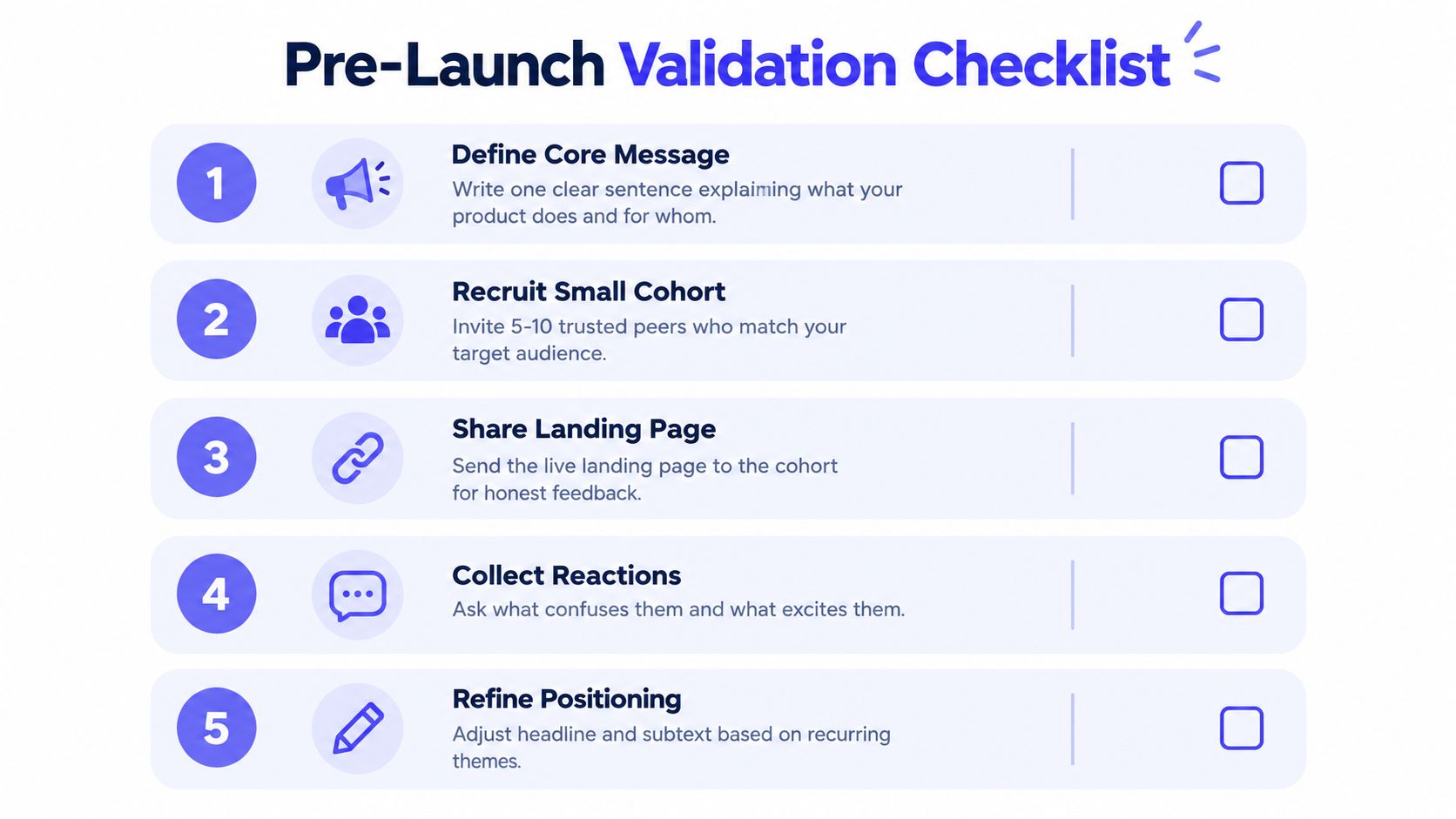
Ask reviewers to describe the product in their own words before you explain it. If their description differs from your intended promise, revise the headline and supporting copy. Then ask what feels unclear, what seems useful, and what they'd expect to happen after clicking the call to action.
Use the feedback to check three things:
- Message clarity: Can a reader tell who the product serves and what it does?
- Proof: Does the demo show a real product outcome rather than only attractive graphics?
- Next step: Can a visitor tell what to do after watching or reading?
Freeze the core offer before launch day. Last-minute changes to the promise, audience, or pricing can make the listing, landing page, and demo contradict each other. Keep a short maker comment ready that explains the product's input, output, workflow, and intended use. For ShipTeaser, that means accurately describing the flow: a product URL goes in, and a short downloadable teaser comes out.
Creating Silent Video Assets That Convert
A launch video needs to make sense even when someone watches with sound off. Build the message around what viewers can read and see, not around narration they may never hear.
ShipTeaser turns a product URL into a 15-second, 1080p silent motion-graphics teaser in about two minutes. The video follows five scenes: hook, problem, solution, proof, and CTA. Silent means no voice-over; an optional music bed is available. The format isn't a timeline editor, screen recording, or prompt-based video generator, so the page needs to communicate the product's value clearly enough for the teaser to work from those inputs.
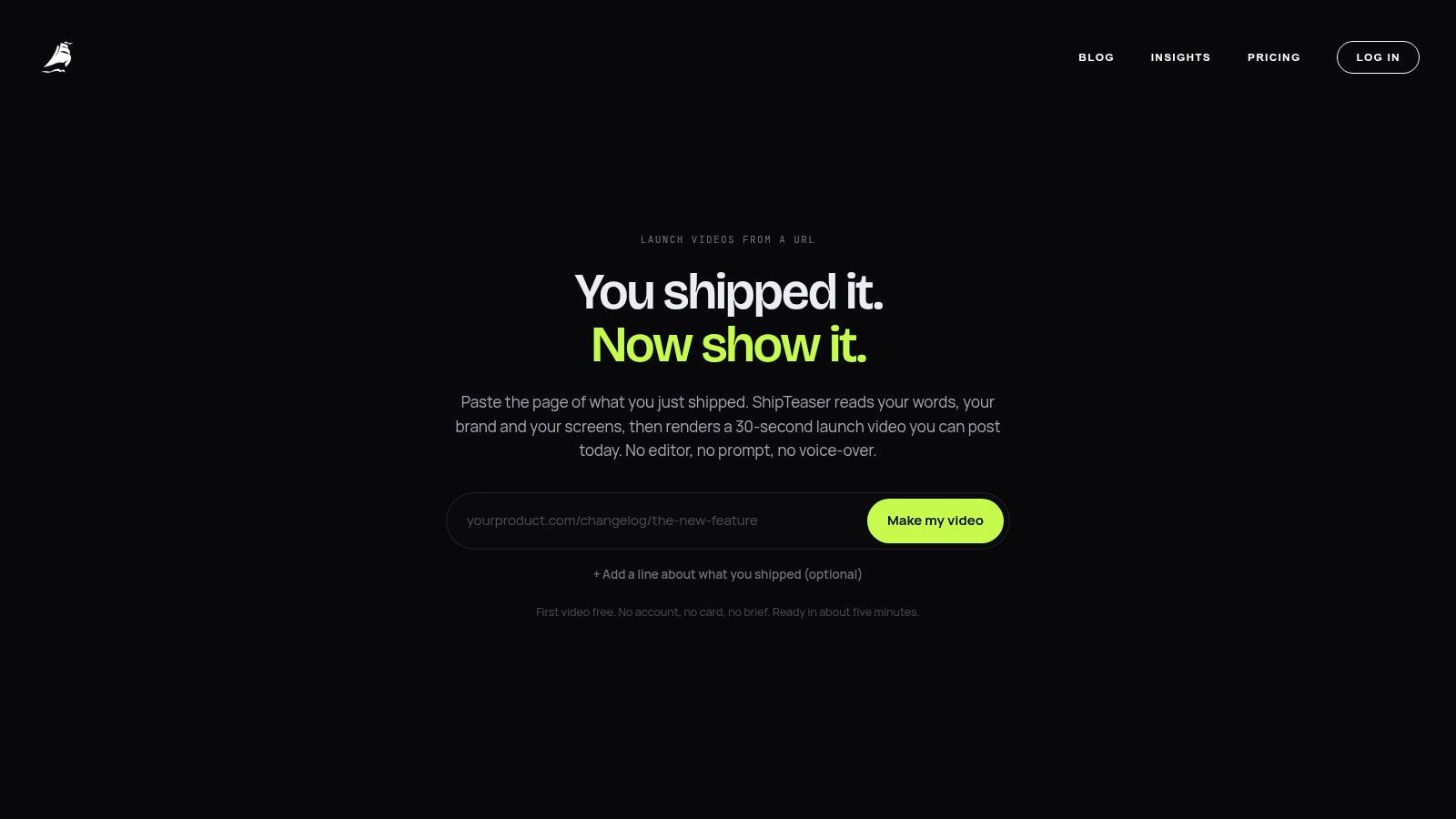
Start with the opening scene. Use a short, specific hook that names the problem or outcome, then make the remaining scenes support that claim. The proof scene should show a concrete product detail or result that a founder can verify. End with one clear next step, such as trying the product or visiting the launch page.
Choose an aspect ratio based on where you plan to post the asset: 16:9, 1:1, or 9:16. Keep the central promise consistent across formats, and check that text remains readable on a phone. Don't expect a video to compensate for a vague landing page. If the source page is unclear, the teaser can only make that unclear message more visible.
The first video is free, with no credit card required. For recurring output, the plans are $99 per month for one video per week, $149 for two per week, and $199 for four per week. Founders preparing a launch asset can review the SaaS launch video workflow and decide whether a short, silent teaser fits their distribution plan.
Executing the First Six Hours of Launch Day
Launch day is an operating shift, not a refresh-the-ranking exercise. Assign someone to answer product questions, record objections, and check whether visitors take meaningful actions after clicking through.
Product Hunt's official launch guide identifies 12:01 a.m. Pacific Time as the preferred start for makers planning ahead. It also stresses preparation over choosing a particular weekday. Submit through the New Product flow, and have the landing page and first comment ready before the listing opens (Product Hunt's launch guide).
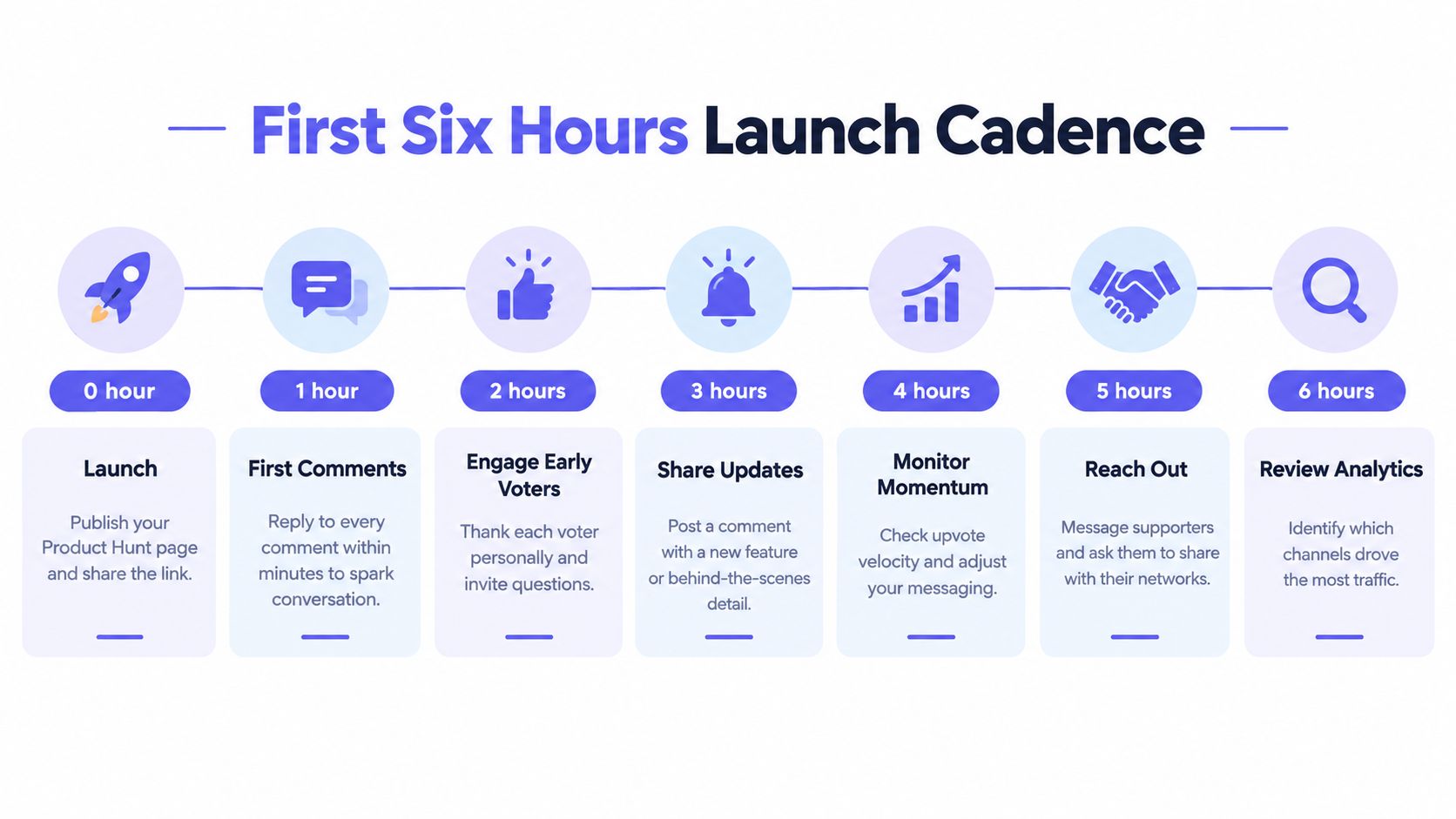
During the first six hours, work in a steady cadence:
- At launch: Check that the listing, links, and product flow work as expected.
- As comments arrive: Reply with direct answers. Log recurring questions instead of copying the same generic response.
- As traffic builds: Monitor referral visits, signups, product activation, and completed actions. Separate visits from users who experience the product.
- When objections repeat: Clarify the relevant copy or answer publicly, without changing the core offer impulsively.
- At the end of the window: Note which channels brought qualified users and which objections still need attention.
Ranking isn't determined by raw upvote count alone. Product Hunt ranking considers factors including featured status, overall engagement, and vote authenticity, so substantive discussion is more useful than indiscriminate voting (Product Hunt ranking guidance). Don't buy votes or ask people to vote without regard to whether they know the product. Ask supporters to visit, try it, and share honest feedback instead.
On launch day: A thoughtful answer to a real question beats a burst of low-context activity.
Prepare a short response template for common questions, but personalize each answer. Use launch email planning guidance to coordinate your announcement with the live listing and give interested readers a clear next step.
Building Resilient Distribution After Launch
A Product Hunt feature can add reach, but it's not a distribution plan you control. Recent reporting says about 10% of launches were reportedly featured as of September 2024, compared with 60% to 98% during 2020 to 2023. Treat editorial exposure as uncertain, and prepare a useful route for visitors to discover the product if the launch isn't featured (reporting on Product Hunt distribution changes).
Build that route before launch day. Decide where the same core message can travel next: founder posts, relevant community updates, your email list, and follow-up content. A short teaser can give each post a consistent visual asset, but the copy should fit the audience and explain why the product is relevant there. Don't spam communities that don't know you or blast the same post everywhere without context.
A practical post-launch rhythm is to turn real launch questions into useful follow-up material. If several visitors misunderstand a feature, clarify it in a post. If people respond to one use case, create a focused example around it. Keep a 30-day content cadence so the launch remains a starting point for distribution, not a single day of activity.
Measure each launch cohort from visitor to signup, activation, paid conversion, and retention. Compare those outcomes across channels, and keep the sources distinct so a spike in visits doesn't hide weak activation. For broader context on building credibility through relevant listings, this guide to how directory submissions build trust can help founders think beyond a single launch platform.
The useful asset isn't only the initial post. It's the repeatable combination of a clear message, a shareable visual, and a follow-up path that helps the right people find and try the product. ShipTeaser's post-launch follow-up guide can help turn the first wave of attention into a sustained communication plan.
FAQ
Is a closed beta suitable for a Product Hunt launch?
A closed beta is usually a poor fit when the community can't participate. Product Hunt's eligibility guidance says launches should be usable, or scheduled to become usable soon with a trustworthy timeline, and warns that closed betas are usually unsuitable when community members can't try the product. Make the access conditions clear before submitting (Product Hunt eligibility guidance).
Can I launch an updated product instead of a brand-new one?
Yes, when the update is substantive. Product Hunt's eligibility guidance allows a new product or one with meaningful updates, so explain what changed and why the release is worth a new public launch. Don't present a minor copy edit as a major product change.
What should I do if someone leaves negative feedback?
Reply publicly, calmly, and specifically. Thank the person for explaining the issue, ask a focused follow-up if the details are unclear, and state what you'll investigate without promising a fix you haven't confirmed. Don't delete criticism because it's uncomfortable; use repeated objections to identify where the product or its messaging needs work.
Can I ask people to upvote or pay for launch support?
Don't pay for upvotes or spam people for votes. Product Hunt's eligibility guidance warns that products can be removed for those practices. Ask people who understand the product to try it, comment, or share it with someone who may find it useful. Founders preparing a technical product launch can also consult this practical MCP server setup guidance when they need supporting implementation context.
A Product Hunt launch is a useful reason to sharpen your message and prepare a shareable product asset, but your results depend on what qualified visitors do next. ShipTeaser turns a product URL into a 15-second, 1080p silent teaser, with a free first video and no credit card required. Visit ShipTeaser to prepare a launch video you can reuse beyond launch day.